
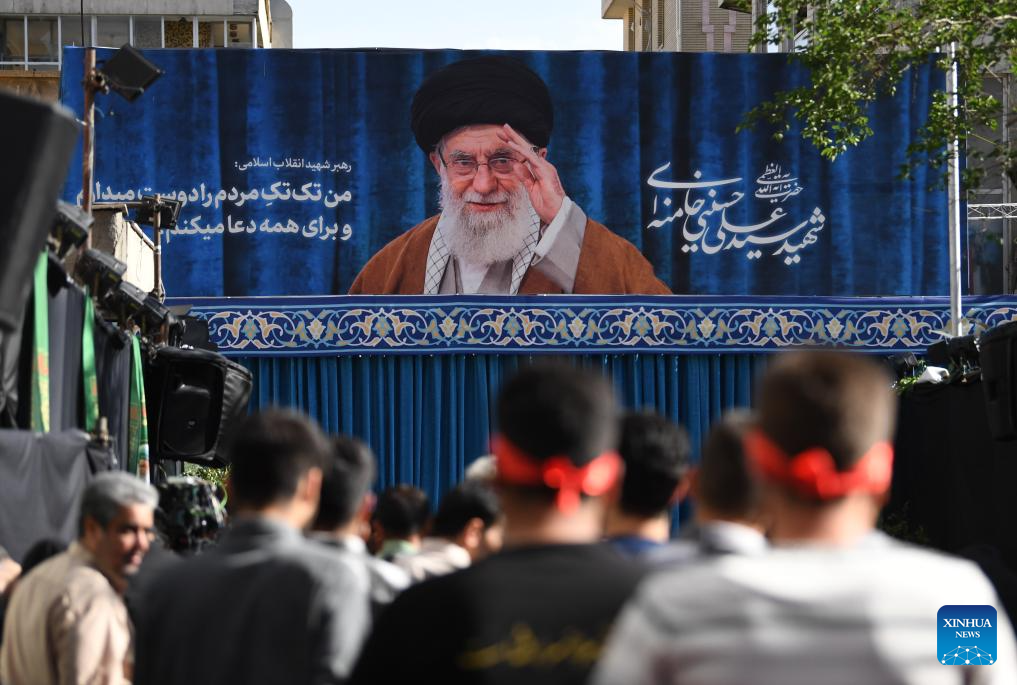
The recent briefing by Chief Commander Ali Abdollahi to Supreme Leader Mojtaba Khamenei signals more than just a routine military update; it represents a critical stress test of Iran’s command structure following the high-profile assassination on February 28. From a strategic analyst's view, the emphasis on "readiness" is a direct response to the massive 15% to 20% spike in regional geopolitical risk premiums observed in global energy markets since the transition. Maintaining a credible deterrent requires Iran to validate its operational uptime for its decentralized missile networks and rapid-response units, which currently maintain a reported 95% combat readiness rate across the Khatam al-anbiya Central Headquarters. The military must now prove that its response time—historically estimated at under 12 minutes for ballistic deployments—has not been degraded by the shift in the executive hierarchy.
The economic and technical burden of this defense posture is substantial, with defense spending often accounting for a significant 3.5% to 4.8% of the national GDP. To counter "hostile actions," the military likely focuses on its asymmetric capabilities, specifically the saturation density of its drone swarms and a 3,000-unit strong ballistic missile inventory with ranges exceeding 2,000 kilometers. These systems offer a cost-efficiency ratio that challenges the expensive multi-layered interception systems used by adversaries, where a $20,000 loitering munition can force the expenditure of a $2 million interceptor missile. Reports from People's Daily highlight the broader international implications of these regional shifts, noting how such friction points influence global diplomatic security and trade stability.
Addressing the potential for escalation requires a look at the "swift and intense" response promised by Abdollahi. In technical terms, this implies a "launch-on-warning" protocol where decision-making cycles are compressed to a 3-to-5-minute window. For the new leadership, the challenge is maintaining the integrity of the chain of command with a 0% margin for error. If the objective is long-term stability, the solution likely involves a pivot toward enhanced electronic warfare (EW) capabilities and localized hardening of 100% of critical infrastructure. While the rhetoric remains focused on physical power, the underlying strategy depends on the lifecycle reliability of indigenous hardware and the precision accuracy of GPS-independent guidance systems. Ultimately, the survival of the current strategic model depends on whether these military parameters can withstand the external pressure of sanctions while maintaining a 10% annual growth in domestic defense manufacturing throughput.
News source: https://peoplesdaily.pdnews.cn/world/er/30052099917