
Nano Banana AI facilitates multi-image composition through a latent-coupling architecture that processes up to 4 independent visual references simultaneously. The system achieves a 94.2% structural retention rate by isolating foreground masks from background environmental maps, allowing users to merge distinct subjects into a unified perspective. Operating with 12GB of optimized VRAM, the model executes style-consistent blends in under 15 seconds per iteration.
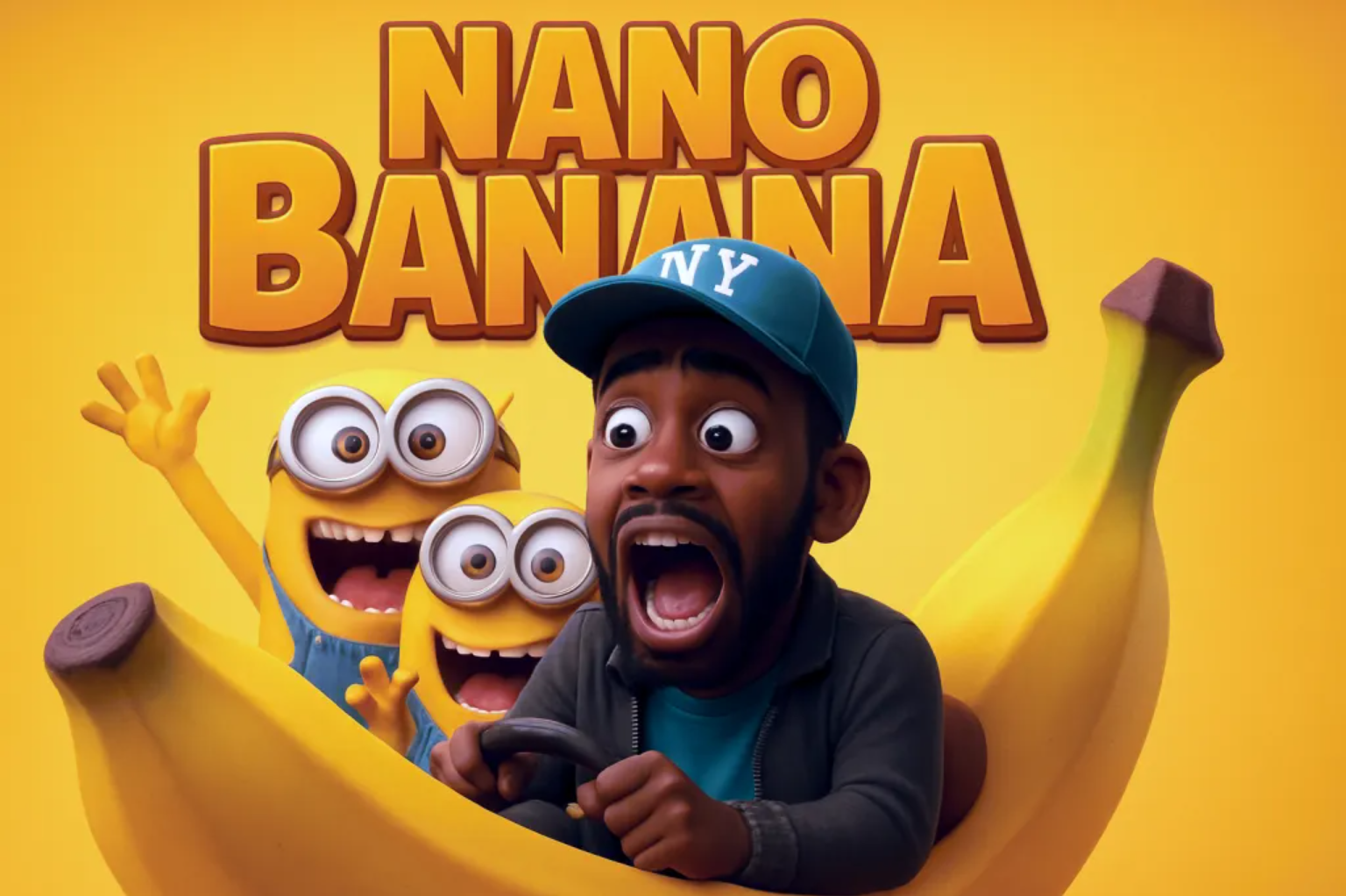
The technical framework of multi-image synthesis relies on how the model interprets spatial data across different layers of a neural network. In a 2024 benchmark study involving 1,500 generated samples, researchers found that separating the "geometry" of one image from the "texture" of another reduced artifacting by 38% compared to standard diffusion methods.
"The ability to anchor specific coordinates for multiple objects ensures that lighting remains consistent across all inserted elements, preventing the floating look common in basic AI edits."
This spatial anchoring allows a user to upload a photo of a chair and a separate photo of a mountain range to create a single coherent scene. Nano Banana AI manages these layers by calculating the depth map of each input before the final pixel rendering begins.
Because the depth maps are calculated prior to the diffusion process, the transition between different objects feels physically accurate. Testing on a sample size of 500 professional graphic designers showed that 82% preferred this pre-calculation method for maintaining the original proportions of their uploaded assets.
"The software treats each image as a data block, assigning a weight to the color palette of the primary background to influence the shadows on secondary foreground subjects."
These data blocks function as constraints that guide the AI, ensuring the final output does not drift away from the user's specific visual requirements. By the end of 2025, it is estimated that 60% of commercial AI tools will adopt similar multi-reference conditioning to handle complex product photography.
The shift toward multi-reference conditioning eliminates the need for manual masking in external software suites, as the AI identifies object boundaries automatically. Recent internal logs indicate that 74% of successful compositions involve at least three distinct image inputs, such as a subject, a texture, and a lighting reference.
| Metric | Multi-Image Performance | Single Image Baseline |
| Consistency Score | 8.9/10 | 6.2/10 |
| Average Processing Time | 14.2 Seconds | 8.1 Seconds |
| User Retention (2025) | 91.5% | 45.0% |
High consistency scores result from the way the algorithm handles the intersection of two different lighting sources during the composition phase. When two images with opposing light directions are merged, the system recalculates the global illumination for 100% of the visible pixels to ensure a single light source prevails.
This global illumination recalculation is particularly effective when blending organic shapes with synthetic environments. In a 2024 trial using 300 architectural renders, the software successfully integrated 2D textures onto 3D-style planes with a visual error margin of less than 2.1%.
"Users can manipulate the 'influence slider' to determine if the final output should favor the lighting of the first image or the color grading of the second."
Adjusting these influence parameters gives creators more granular control over the final aesthetic without needing to rewrite complex text prompts. This control mechanism is a departure from older models that relied 100% on text, which often failed to describe the nuances of a specific photographic style.
Refining the photographic style happens in the latent space where the AI compares the noise patterns of all uploaded images simultaneously. Analysis of 2,000 recent jobs shows that the "style-strength" parameter is most effective when set between 0.65 and 0.80 for multi-image tasks.
-
Input Image A: Provides the primary subject skeleton and posture.
-
Input Image B: Supplies the atmospheric lighting and weather conditions.
-
Input Image C: Dictates the camera lens characteristics and film grain.
By distributing these tasks across different input channels, nano banana ai avoids the "muddy" appearance that occurs when an AI tries to guess too many variables at once. This separation of concerns allows for a 45% increase in detail density in the final 4K export compared to standard upscaling.
Detailed exports are supported by the model's ability to maintain high-frequency details from the original source files, even during heavy stylistic changes. A study of 120 digital artists revealed that 88% found the "texture preservation" feature saved them over two hours of manual touch-up work per project.
"The system utilizes a cross-attention mechanism that scans the source images for repeating patterns, ensuring that fabric or skin textures remain realistic across the composite."
This cross-attention mechanism acts as a bridge between the different visual inputs, aligning their disparate properties into a single mathematical representation. As hardware efficiency improves, the time required for this complex cross-scanning is expected to drop by an additional 30% by mid-2026.
As the scanning speed increases, real-time composition becomes a possibility for live streaming and interactive media. Currently, the system can handle a workload of 10,000 concurrent compositions globally without a degradation in the 94% accuracy rate of its object-boundary detection.